
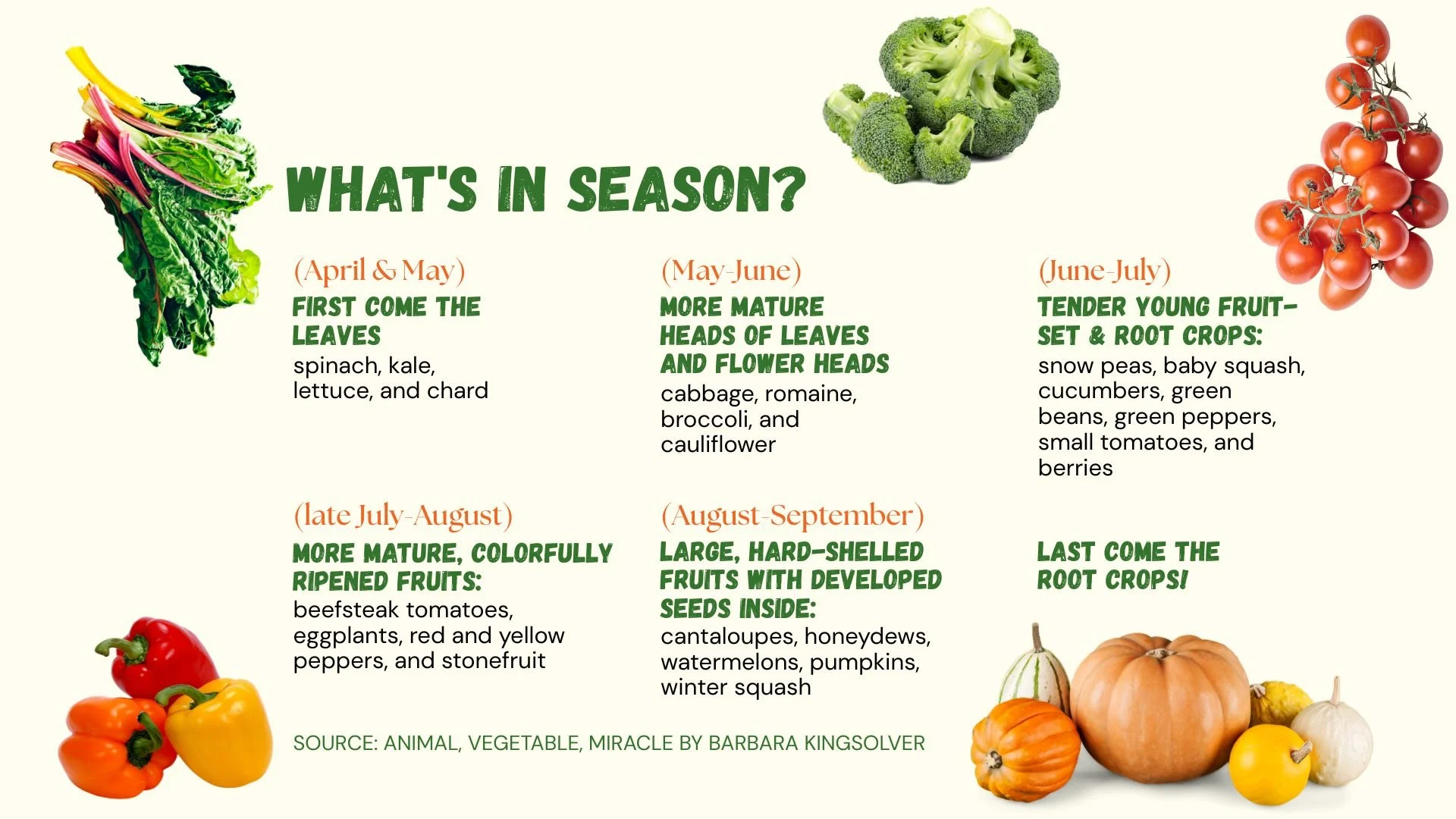
This is a natural outcome of our global food supply. When every vegetable is seemingly available at the grocery year round, does seasonality even matter? Barbara Kingslover offers a way to remember what’s in season in her 2007 book Animal, Vegetable, Miracle:
“First, …in early spring,…come the leaves: spinach, kale, lettuce, and chard (April and May). Then more mature heads of leaves and flower heads: cabbage, romaine, broccoli, and cauliflower (May-June). Then tender young fruit-set: snow peas, baby squash, cucumbers (June), followed by green beans, green peppers, and small tomatoes (July). Then more mature, colorfully ripened fruits: beefsteak tomatoes, eggplants, red and yellow peppers (late July-August). Then the large, hard-shelled fruits with developed seeds inside: cantaloupes, honeydews, watermelons, pumpkins, winter squash (August-September). Last come the root crops, and so ends the produce parade."
Another way to track seasonality is to check the weather forecast. Higher temperatures mean more variety will be available. Our seasons were once fairly predictable, but as the climate changes and temperature extremes become more common, we’re seeing unexpected early crops—zucchini and cherries in mid-June, anyone?—or devastating losses, like the peaches wiped out by early frosts in recent years.
When you begin to peel back the layers of seasonality to understand the factors and conditions that determine your favorite foods’ local availability, you develop a more dynamic relationship with your food.
