
Let’s Meal Prep the Way Professional Kitchens Do!
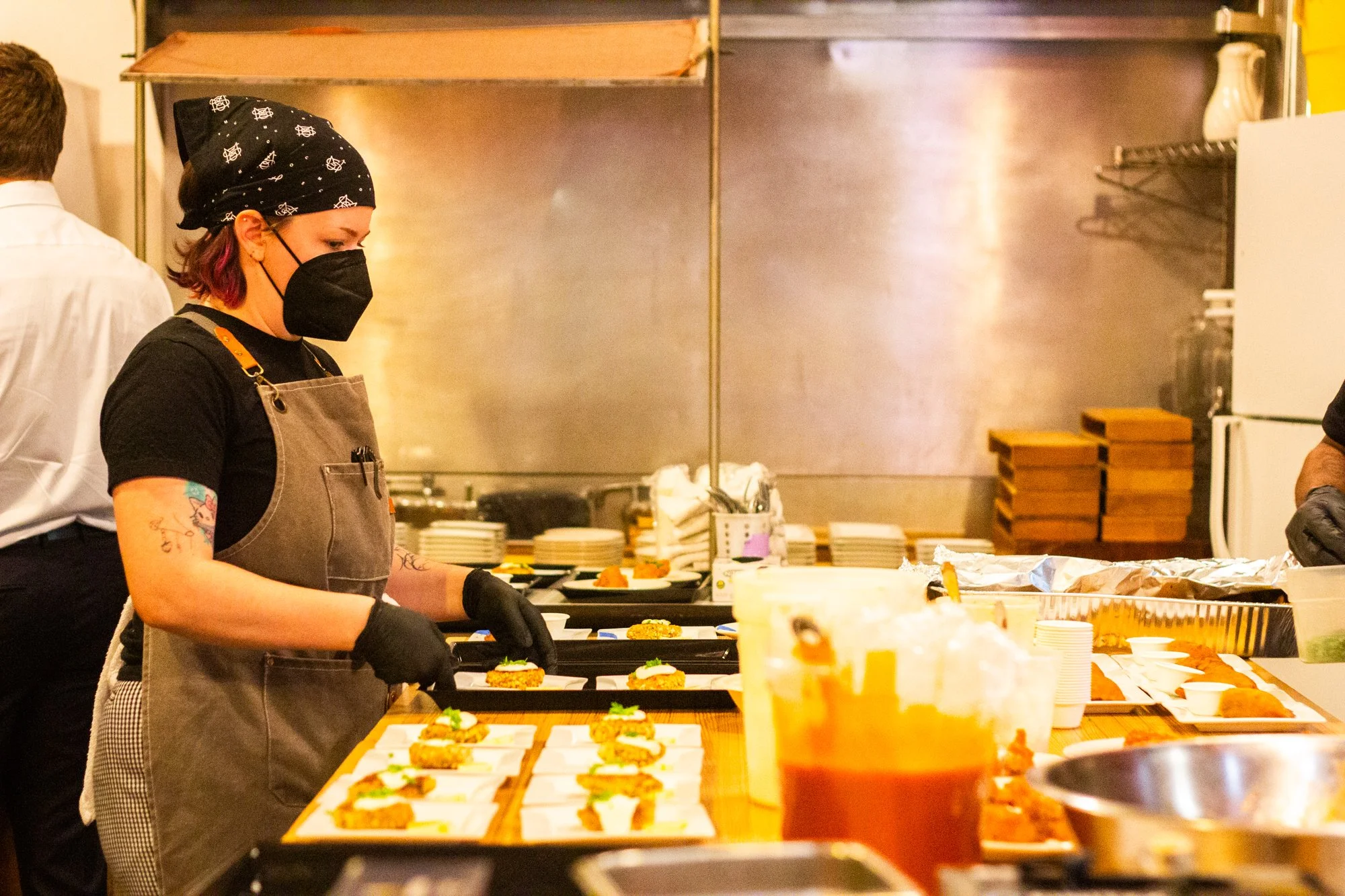
We are always looking for fresh inspiration to answer the perennial question, “What’s for dinner?” So, we asked our colleague Allison from the Link Up Illinois team to be a guest writer and share their knowledge with you.
Allison has spent more than seven years working in restaurants, picking up skills they still use today. Over the next few weeks, Allison will share how they shop, prep, and cook in a way that results in fresher, tastier meals.
Thank you, Allison, for sharing your philosophy with us!
—Emily, Market Manager
But first, I want to share a bit about myself. I didn’t enjoy the food that I ate growing up. I was blessed to have a mom who cooked every meal, and I was always fed. When I was 9, I had my tonsils removed. Recovering on the couch, I discovered Food Network, and my world of food opened up. I was suddenly aware that there were options beyond bland meat, starch, and vegetables (typically frozen). I absorbed something new every chance I could.
My experience in professional kitchens has been a journey in search of better food. I’ve sought to create better memories with food and learn skills that can transfer to the home kitchen. I prioritize working in high-volume kitchens that feed many people efficiently and relatively affordably. The difference in “prep” as a concept is one of the biggest things I’ve learned. That is what I want to share with you all today.
Meal prep on the internet conjures up very specific images of matching containers, measured protein, and eating the exact same meals for the full calendar week. Prep in a restaurant context means getting time-consuming components ready ahead of time so that you are ready to cook. Taking time for restaurant-style prep makes home cooking easier, more interesting, and more enjoyable. It also keeps your food fresher and tastier because it is not sitting finished in the fridge for several days.
Common things that restaurants do on prep day:
Chopping vegetables: Pretty much anything except herbs can be chopped ahead of time and stored in the fridge for a few days. Potatoes need to be submerged in water after chopping so they don’t brown.
Make sauces: Marinades, dipping sauces, salad dressings, pasta sauce—any sauce can be made ahead of time. If you’re not already making sauces with your meals, you should try! It is one of the things that makes restaurant food so good.
Season your meat: At-home BBQ aficionados already know this, but it applies beyond the grill. Marinating or just salting and peppering your meat ahead of time makes your meat taste better, cook better (salt draws moisture out of the muscle for a more even cook), and preserves raw meat longer in the fridge, preventing spoilage and waste. Meat substitutes need less time to take on flavors, but marination is still a good call if you’re going for unctuous flavor.
Pre-cook components: This one differs more based on the type of food you are making. Generally, you can pre-cook whole grains/beans, braise meats, and pre-cook components of a dish that will be cooked again. I’ll give specific examples in the coming weeks.